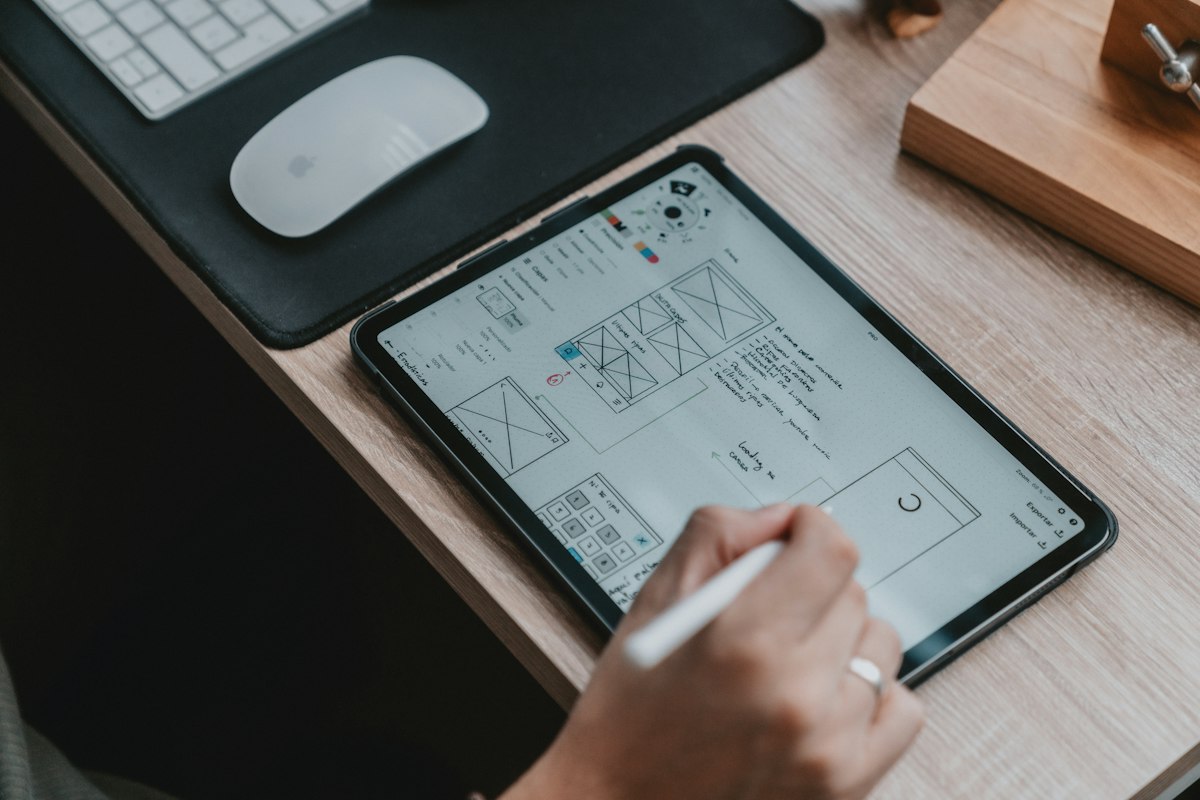

As businesses rapidly evolve in the digital landscape of 2026, standard web experiences no longer suffice to capture and retain customer attention. To stand out, companies must prioritize user journeys that are both visually stunning and highly functional. Partnering with a skilled UI UX designer Gujranwala is one of the most effective ways to ensure your digital storefront meets modern expectations and delivers real business value. A website is no longer just a digital brochure; it is a dynamic, living touchpoint that defines how clients perceive your professionalism, speed, and customer-first mindset.
Why Partnering with a UI UX designer Gujranwala is Crucial for 2026
Modern user interface (UI) and user experience (UX) design is about removing friction. When visitors land on your website, they make a subconscious decision to stay or leave within three seconds. A professional UI UX designer Gujranwala can help you construct interfaces that guide users naturally toward conversions. By understanding the local and international market dynamics, they structure content and interactive elements to build trust instantly. This local expertise, combined with global design standards, bridges the gap between complex software backend logic and seamless, user-centric frontends.
Furthermore, digital interactions have become highly personalized. In 2026, visitors expect a website to recognize their preferences, adapt to their screen orientation instantly, and load within a fraction of a second. If your website is confusing to navigate, potential clients will immediately bounce to a competitor. Investing in tailored design ensures that every touchpoint—from the homepage to the checkout funnel—is optimized for maximum retention and minimum drop-off rates.
The Evolution of UI/UX: Looking Toward 2026
The role of user interface and user experience design has changed dramatically over the last few years. We have moved past simple grid structures and generic layouts into the era of immersive experiences. In 2026, businesses are focusing on storytelling and interactive narrative flows. A website is no longer expected to be a passive block of text. Instead, it must act as a guided journey where each scroll reveals more about the brand's core values, product benefits, and customer success stories. This shift requires a deep understanding of visual hierarchy, timing, motion design, and user psychology.
Moreover, the integration of advanced technologies like AI and augmented reality has created new opportunities for custom interfaces. Websites can now feature virtual try-ons, real-time visual configurations, and predictive navigation that dynamically adapts based on the user's intent. When properly integrated, these elements create a sense of wonder and utility that builds deep brand loyalty. To execute this level of sophistication, working with a specialist who understands both aesthetic trends and performance boundaries is absolutely crucial.
The Foundations of Professional Web Design in 2026
To succeed in the current competitive environment, businesses require a solid foundation in professional web design. This entails responsive layouts that adjust perfectly across smartphones, tablets, laptops, and ultra-wide desktop monitors. Mobile-first design is no longer a luxury or an afterthought; it is the absolute baseline of web design. Your mobile interface must be designed with thumb-friendly navigation, readable typography, and lightweight media assets that load instantly even on slower mobile networks.
Beyond responsiveness, modern websites must incorporate accessibility features. Designing for all users, including those with visual or motor impairments, is not only ethically responsible but also boosts your search engine rankings. Features like high-contrast text options, screen reader support, descriptive alt text, and logical keyboard navigation are core elements that any expert designer will implement. By building an inclusive website, you expand your reach and project an image of an empathetic, forward-thinking business.
Minimalism vs. Rich Interactions: Finding the Balance
One of the primary challenges in 2026 is finding the right balance between clean minimalism and engaging interactive elements. On one hand, a cluttered website overwhelms visitors and slows down load times. On the other hand, a site that is too simple can feel cold, uninspiring, and forgettable. The key lies in applying functional minimalism, where every design choice serves a specific purpose. Whitespace is used strategically to draw attention to high-value areas like call-to-action buttons, pricing cards, and testimonials.
Meanwhile, rich interactions like parallax scrolling, cursor-tracking effects, and customized video backgrounds should be used sparingly. They must complement the text rather than distract from it. When a user hovers over a service card, a gentle shadow lift or a subtle color transition tells them the element is clickable without disrupting their reading flow. Achieving this balance requires a highly refined eye for design, ensuring that visual flair never comes at the expense of usability or page speed.
Essential Interactive Features for Modern Business Websites
Interactive features keep users engaged and decrease bounce rates. One of the key aspects of modern web design is micro-interactions. These are subtle animations or visual feedback cues that occur when a user performs a minor action, such as hovering over a button, submitting a form, or toggling a dark mode switch. These micro-interactions make the website feel alive, responsive, and satisfying to navigate. Without them, a site can feel static, rigid, and outdated.
Another essential feature is dynamic content personalization. Through smart cookies and user-selected preferences, a website can tailor its displayed services or products based on the visitor's past behavior. For instance, if a user has repeatedly searched for e-commerce solutions, the site's hero banner can dynamically pivot to showcase related case studies. This level of customization dramatically improves relevance and directly drives leads to take action.
How the Best Software House in Gujranwala Approaches UI/UX
Creating a world-class website requires a collaborative environment where designers, developers, and copywriters work in perfect sync. The Best software house in Gujranwala employs a holistic methodology that starts with extensive user research and wireframing before a single line of code is written. By mapping out user flows, creating detailed interactive prototypes, and conducting rigorous usability tests, they ensure the final product is both beautiful and performant.
Additionally, developers at a premier agency focus on clean code structure. A beautifully designed website is useless if it takes ten seconds to load. By leveraging modern frameworks, static site generation, and optimized content delivery networks (CDNs), they ensure that the design assets are delivered with lightning speed. This synergy between aesthetic design and technical performance is what differentiates average websites from high-converting, search-engine-optimized digital platforms.
Important Technical Optimizations for Search Engine Rankings
A stunning website is only effective if your target audience can find it. That is why UI/UX and search engine optimization (SEO) are deeply intertwined. Search engines prioritize websites that offer exceptional user experiences, which means page speed, Core Web Vitals, and secure HTTPS connections are major ranking signals. A well-designed site structures information hierarchy with proper heading tags, clean URLs, and logical internal linking paths, making it easy for search engine crawlers to index the content.
Furthermore, integration of structured data, such as schema markup, helps search engines interpret your content accurately. This can result in rich snippets in search results, which significantly improve click-through rates. By combining local SEO practices with premium user experience principles, businesses can secure top spots on search engine results pages and attract highly qualified organic traffic.
Selecting the Ideal UI UX designer Gujranwala for Your Project
When selecting a design partner, it is vital to review their portfolio and understand their design philosophy. A top-tier UI UX designer Gujranwala will not just show you static mockups; they will show you active, living websites and explain the data-driven decisions behind their layouts. They will ask deep questions about your target audience, your brand identity, and your business goals to ensure the final design aligns with your long-term vision.
Moreover, look for a partner who is committed to ongoing improvement. A website should not be a one-time project that is forgotten after launch. Continuous monitoring using analytics, heatmaps, and user feedback allows you to make iterative refinements over time. This approach ensures your platform continues to perform optimally as user behaviors and technological trends shift.
To learn more about premium design solutions, explore the about section to understand the background and methodology that goes into every high-performing website. Ready to transform your digital presence? Visit the contact page to start your project discussion today.
Frequently Asked Questions (FAQ)
❓ What is the difference between UI and UX design?
UI (User Interface) design focuses on the visual aspects of a website, including colors, typography, buttons, images, and overall aesthetic layouts. UX (User Experience) design, on the other hand, deals with the overall feel of the site and how easily a user can navigate through it to accomplish a specific task. While UI makes the website look appealing, UX ensures that it is functional, intuitive, and frictionless.
❓ How does site speed affect UI/UX and conversion rates?
Site speed is a critical component of user experience. If a website takes more than three seconds to load, a significant percentage of users will abandon it. Fast-loading pages keep users engaged, reduce bounce rates, and build trust. From a business perspective, even a one-second delay in page load time can result in a significant drop in conversion rates, making speed optimization a top priority for designers and developers alike.
❓ Why is mobile-first design essential for modern businesses?
With over half of global web traffic coming from mobile devices, designing a website for mobile screens first ensures that the largest segment of your audience has an optimal experience. Mobile-first design forces designers to prioritize essential content and simplify navigation, which often leads to a cleaner, more efficient desktop version as well. It is also a key ranking factor for search engines.
❓ What tools do professional designers use to create interfaces?
Professional designers use a variety of tools depending on the project phase. For wireframing and prototyping, industry-standard tools like Figma, Adobe XD, and Sketch are highly popular because they allow for real-time collaboration and interactive mockups. For custom graphics and asset preparation, Photoshop and Illustrator are widely used, while analytics tools like Hotjar help gather real-world usage data post-launch.
Turn These Insights Into Results
Choose the most relevant next step for your website or online business.
- Get a Free SEO & AI Search Audit Find the technical and visibility gaps holding your website back.
- SEO-Ready Web Development Build a faster, conversion-focused website with a clean technical foundation.
- Explore Mian Adil’s Portfolio See web development, SEO, e-commerce, and SaaS work in one place.